

For years, opening a restaurant was considered the ultimate entry into the food business. But in today’s F&B market, that idea is quickly becoming outdated. High rents, rising operational costs, staffing challenges, and unpredictable customer footfall have made traditional restaurants one of the most capital-intensive and risky business models.
In 2025, smart food entrepreneurs are choosing a better path — renting a kitchen space, especially as cloud kitchens are dominating the F&B market.— renting a kitchen space. This modern approach allows brands to launch faster, operate leaner, and scale smarter without being tied down by heavy investments or long-term commitments.
The True Cost of Opening a Traditional Restaurant
Opening a dine-in restaurant today is no longer just about cooking good food — it’s about managing overwhelming costs before you even open your doors.
- A traditional restaurant setup typically demands:
- Premium rent in high-footfall locations
- Expensive interiors, furniture, and fit-outs
- Front-of-house staff and management
- Licenses, utilities, maintenance, and wastage
- Months of setup with zero revenue
By the time operations begin, many founders are already under significant financial pressure. A large portion of capital is locked in before the first order is served, making break-even slow and profitability stressful.
What Does Renting a Kitchen Space Actually Mean?
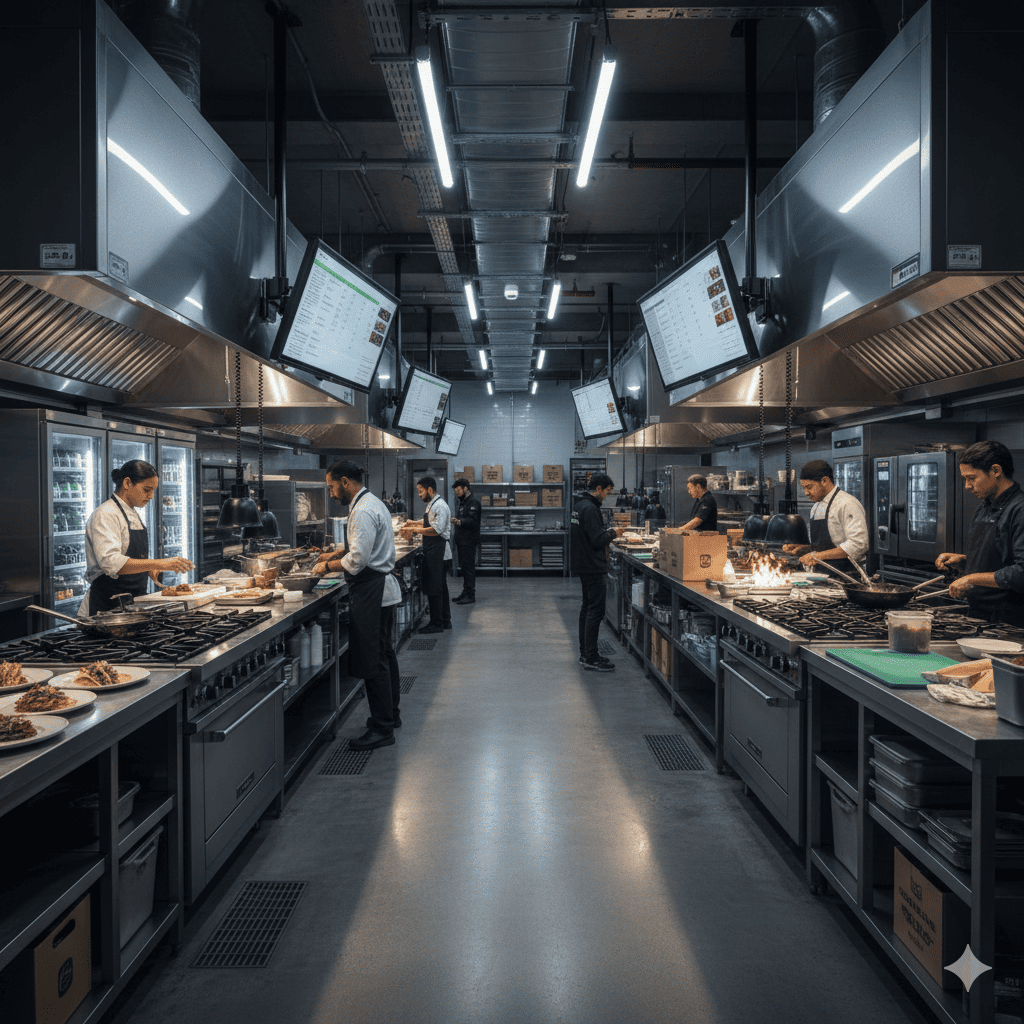
Renting a kitchen space allows food brands to operate from a fully equipped, compliant kitchen without owning or setting up the infrastructure themselves.
- These kitchens are designed for:
- Delivery-first food brands
- Cloud kitchens and virtual restaurants
- Catering and takeaway businesses
Kitchen space rental removes the burden of real estate, allowing entrepreneurs to focus entirely on food quality, branding, and growth.
Lower Investment, Smarter Risk Management
One of the biggest advantages of renting a kitchen space is the dramatic reduction in startup costs.
Compared to opening a restaurant, kitchen rental:
- Cuts startup costs by up to 60–70%
- Eliminates interior and décor expenses
- Reduces staffing needs
- Allows faster break-even
Lower investment doesn’t mean lower ambition — it means smarter decision-making. Founders can test, refine, and grow their brand without risking their entire capital.
Faster Launch, Quicker Market Entry
Speed matters in today’s competitive F&B market.
With rented kitchen spaces, brands can:
- Launch within weeks instead of months
- Start generating revenue immediately
- Collect real customer data early
- Modify menus and pricing based on demand
This fast feedback loop allows brands to evolve quickly — something traditional restaurants struggle to do once heavy investments are locked in.
Built-In Flexibility for Growth or Exit
Unlike traditional restaurant leases, kitchen space rentals are flexible by design.
This flexibility allows brands to:
- Scale operations when demand grows
- Add or test new virtual brands
- Expand to new locations with minimal setup
- Exit or pause operations without major losses
- In an unpredictable market, flexibility is not optional — it’s essential.
Operational Support Makes the Model Even Stronger
Modern kitchen rental providers don’t just offer space — they offer systems.
Managed kitchen models support brands with:
- Trained kitchen staff
- Procurement and inventory control
- Standard operating procedures
- Hygiene, safety, and compliance
For first-time founders or growing brands, this operational backing significantly increases the chances of success.
Technology & AI Are Changing the Game
In 2025, kitchen rentals are powered by technology and AI systems that help brands operate smarter.
These systems help brands:
- Forecast demand accurately
- Control inventory and food cost
- Reduce wastage
- Maintain consistent quality
Technology-backed kitchens allow brands to operate with precision, not guesswork — something most standalone restaurants lack.
Perfect Fit for Cloud Kitchens & Virtual Brands
Renting a kitchen space is ideal for:
- Cloud kitchens
- Delivery-only brands
- Multi-brand operators
- Franchise pilots and test markets
Instead of investing in multiple physical outlets, brands can operate efficiently from shared kitchen hubs. Companies like Kitchen Sharer enable this model by combining kitchen rental, operational management, and consultancy — creating a complete ecosystem for food brands.
Why Renting Beats Ownership in Today’s F&B Market
The modern F&B market rewards brands that are:
- Asset-light
- Data-driven
- Operationally efficient
- Scalable
Owning a restaurant ties founders to high fixed costs and rigid structures. Renting a kitchen space, on the other hand, offers flexibility, adaptability, and long-term sustainability — making it the smarter choice for today’s food entrepreneurs.
It’s important to understand that renting a kitchen space does not limit long-term growth. In fact, some cloud kitchen brands become so successful that they naturally evolve into fully fledged restaurants. By starting with a rented kitchen, founders can validate demand, strengthen their brand, and refine operations—so when they expand into a physical restaurant, it becomes a strategic decision rather than a financial risk.
Final Thoughts
Opening a restaurant is no longer the only—or the smartest—way to enter the food industry. In 2025, renting a kitchen space offers a faster, safer, and far more scalable path to building a successful food brand.
Today, success in the food business is not about owning physical space; it’s about owning systems, data, and brand value. Kitchen space rental enables entrepreneurs to launch quickly, operate intelligently, and grow sustainably without exposing themselves to unnecessary risk. For modern food brands, this model is not a trend—it is the future.